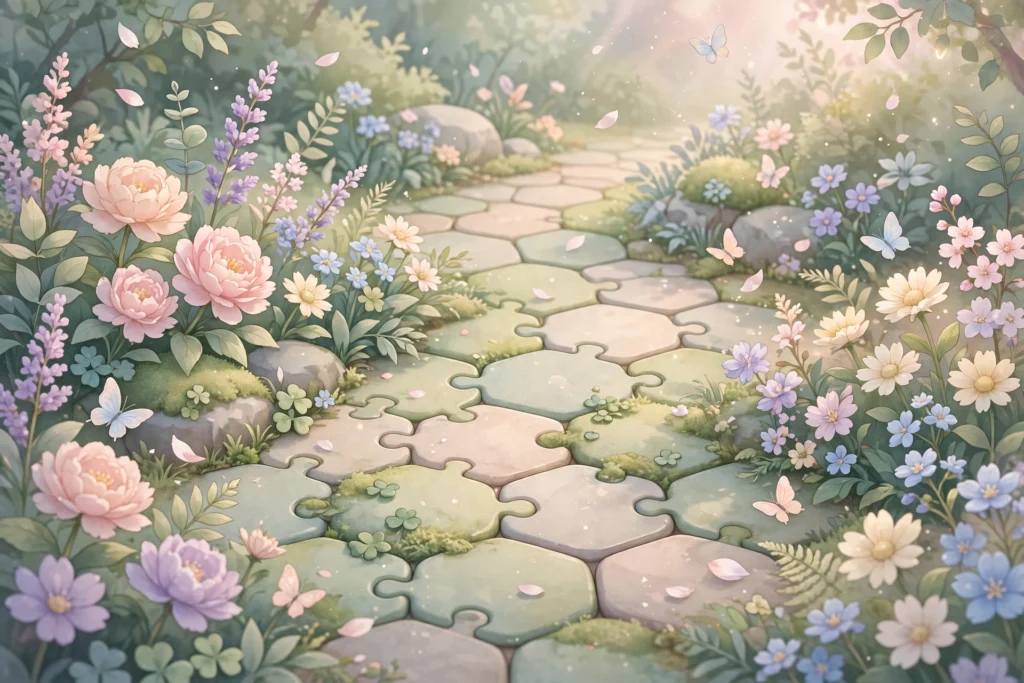
What Is the Zen Blossom Game?
The Zen Blossom game is a relaxing puzzle game built around flowers, soft colors, and gentle play. The name itself points to its style. Zen suggests calm, balance, and a slower pace. Blossom points to flowers, growth, and a garden setting. Together, they describe a game that aims to feel peaceful rather than frantic.
In broad terms, Zen Blossom belongs to the family of calm matching and garden puzzles. Players work through flower themed boards at a relaxed pace, matching pieces, clearing gentle goals, and enjoying the visual calm of a blooming garden. There is no need to rush through a board in seconds. The pleasure comes from the pattern, the colors, and the quiet sense of progress as a board opens up.
As with other flower named games, it is important to keep Zen Blossom separate from the Blossom word puzzle. The word puzzle is a daily letter game in which players form words from seven letters arranged around a central letter. Zen Blossom is not a word game in that sense. It is a visual, flower themed puzzle experience, and it appeals to players who prefer images and patterns over spelling and word lists.
This guide explains what Zen Blossom is, how its relaxed style works, how it compares with the Blossom word game, and how to get the most from calm puzzle play. It does not claim that the games are the same, and it does not claim any link between their makers.
How Zen Blossom Play Feels Different
Many puzzle games push you to move fast, beat a timer, or chase a high score. Zen Blossom takes the opposite approach. The game is designed to feel easy on the mind, even when a board needs some thought. That difference shows up in several ways.
A Slower Pace
Calm puzzle games give you time to look, think, and choose. You can study a board without a clock forcing a quick tap. That slower pace helps new players learn the rules without stress, and it helps experienced players enjoy the pattern itself instead of only the result.
Soft Visuals and Gentle Sound
Flower themes lend themselves to soft colors, rounded shapes, and garden scenes. In a relaxing game, those visuals are part of the point. A board that looks calm tends to feel calm. If a version you play includes sound, gentle music or soft effects can add to that mood, while a mute option lets you play in quiet places.
Goals That Feel Achievable
Relaxing games often set goals that feel within reach, such as clearing a set of flowers, opening a garden area, or finishing a board at your own pace. The goal still gives you a reason to play, but it does not need to feel like a test. Progress feels steady, and a board that takes a little longer still feels like a pleasant session.
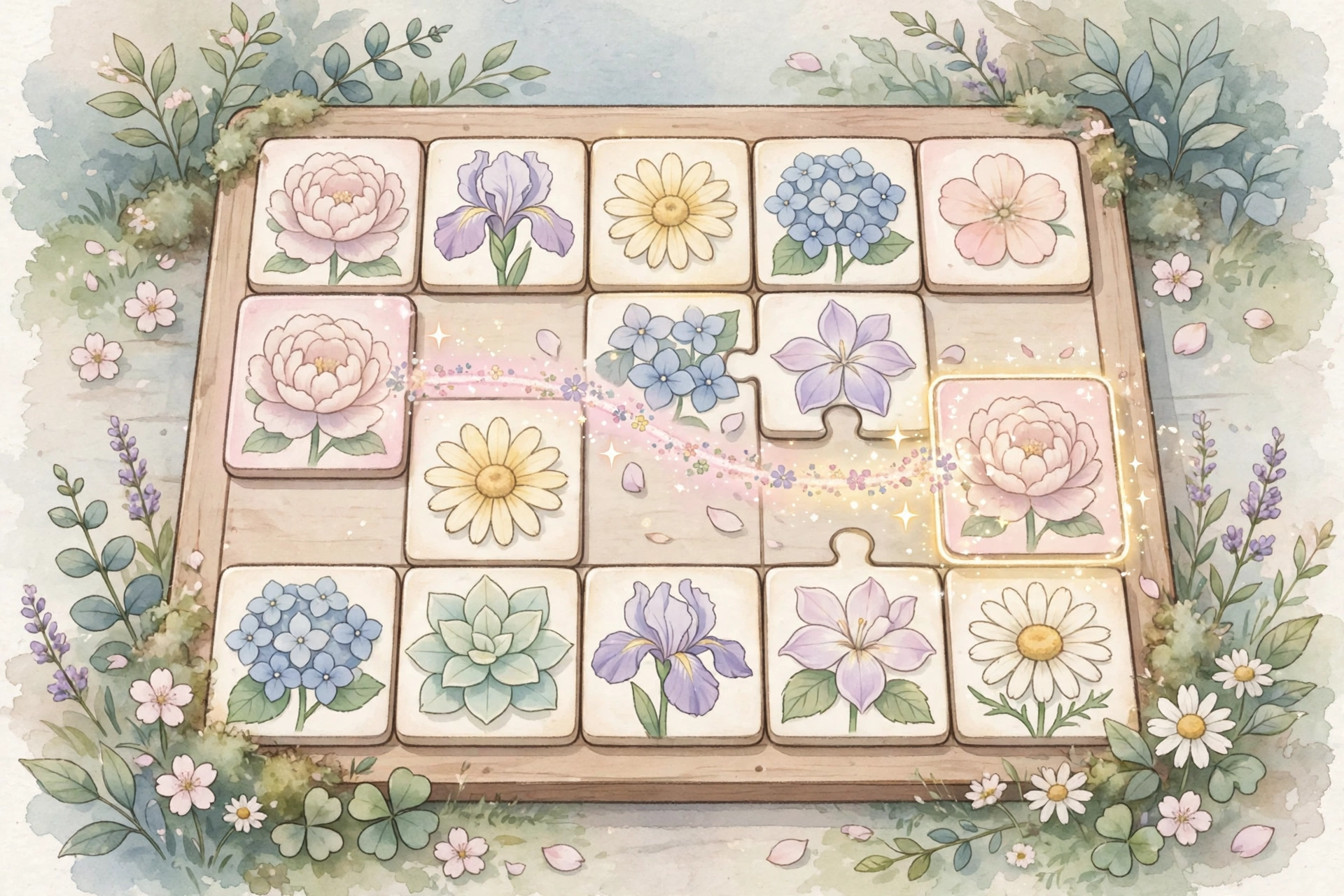
How to Play a Relaxing Flower Puzzle
Exact controls can vary by version and device, so always check the in game tutorial for the version you play. In general, relaxing flower puzzles follow a simple pattern that is easy to learn.
Step 1: Study the Board
Look at the full board before you move. Notice the colors, the shapes, and any special tiles or goal areas. In a calm game, there is no penalty for taking your time. A short look at the start often leads to a smoother board later.
Step 2: Make a Match or a Gentle Move
Depending on the version, you may swap neighboring tiles to match three or more, tap groups of matching flowers, or place pieces to complete a pattern. The core idea is the same: match like with like, clear space, and move toward the board goal. If a move does not work, try another. Calm games are built to forgive a wrong first try.
Step 3: Enjoy the Chain Effect
When matched pieces clear, new pieces often fall or bloom into place. Those shifts can create new matches without extra effort. Watching a board open up in this way is one of the quiet joys of a relaxing puzzle. You do not need to force it. Let the board settle, look again, and choose your next move.
Step 4: Finish the Board at Your Own Pace
Some boards end when you meet a goal, such as clearing a color or opening a path. Others end when the board is full or a pattern is complete. Either way, the finish should feel satisfying rather than rushed. If you want to stop mid board, a calm game should let you pause and return later without losing your place.
Players who enjoy a daily word habit as well may like our guide to the Word Blossom game. It explains letter play in simple terms and shows why many people pair a calm visual puzzle with a daily word puzzle.
Zen Blossom Game vs the Blossom Word Game
Because the names sound alike, many players search for both games in the same session. The comparison below keeps the two games clearly apart.
| Feature | Zen Blossom Game | Blossom Word Game |
|---|---|---|
| Main activity | Visual flower puzzle play | Building words from letters |
| Main skill | Pattern spotting and calm planning | Vocabulary and spelling |
| Pace | Slow, gentle, and unhurried | Thoughtful, often one puzzle a day |
| Mood | Relaxing, garden-like, and soft | Focused, word centered, and quiet |
| Best for | Players who want to unwind with images | Players who want a daily word challenge |
The key point is simple. Zen Blossom is a visual relaxation puzzle. The Blossom word game is a letter puzzle. Both can be calm, but they calm the mind in different ways. One uses color and pattern. The other uses language and word recall. Some players will prefer one style, and some will enjoy both at different times of day.
To see how word puzzles compare with each other, read our Blossom game vs Wordle guide. It covers daily play, scoring habits, and how to choose a word game that fits your routine.
Why Relaxing Puzzles Appeal to So Many Players
Relaxing puzzles have grown popular for a clear reason. Modern days are full of alerts, deadlines, and fast content. A calm puzzle offers a short break from that pace. It gives your hands something simple to do and your mind a single, pleasant task to focus on.
Flower themes add to that appeal. Gardens are linked in many cultures with peace, care, and slow growth. A game that uses blooming flowers, soft greens, and gentle pinks can feel like a small garden you tend for a few minutes. That feeling is different from a game built around speed, competition, or loud effects.
Relaxing puzzles also fit many parts of the day. They work as a morning warm up, a lunch break pause, an evening wind down, or a quiet activity before bed, if you keep screen light low. Because a session can be short, you can enjoy the game without giving up a large part of your day.
That said, a relaxing game still works best with a simple limit. Decide in advance how long you want to play, such as ten minutes or a few boards. A limit keeps the session calm and prevents a relaxing game from turning into a long, tiring session.
Tips for a Better Zen Blossom Session
You do not need advanced tactics to enjoy a relaxing puzzle, but a few habits can make each session feel better.
Play in a Calm Setting
Choose a quiet spot, lower extra noise, and sit in a comfortable position. A calm setting helps the game do its job. If you play while multitasking, the relaxing effect fades, and the game can start to feel like one more task.
Look Before You Move
Even in a relaxed game, a short look at the board helps. Notice which moves open up space, which moves help the goal, and which moves set up a larger match. You do not need to plan five moves ahead. One thoughtful move at a time is enough.
Focus on the Pattern, Not Just the Finish
In a fast game, the finish is the main reward. In a relaxing game, the pattern itself is part of the reward. Notice the colors, the way pieces fall into place, and the slow opening of the board. That attention turns a simple puzzle into a mindful break.
Take Breaks Between Boards
After you finish a board, pause for a moment before you start the next one. Stretch, take a drink of water, or look away from the screen. Short breaks keep your eyes fresh and keep the game feeling like a rest, not a routine you rush through.
Keep the Game Pleasant for Older Players Too
Calm puzzles often appeal to older players, because they are gentle, visual, and easy to learn. Our guide to the Blossom game for seniors offers practical tips on comfortable play, daily routines, and puzzle habits that suit a slower pace. Those tips work well for Zen Blossom sessions too, for players of any age who want a gentle routine.
Zen Blossom for Stress Relief: A Balanced View
Many players say that calm puzzles help them feel more relaxed. That personal experience is common, and it makes sense. A simple, focused task can give the mind a break from worry and busy thoughts.
At the same time, it is wise to keep expectations balanced. A puzzle game is a pleasant pastime, not a treatment for stress, anxiety, or sleep problems. If you feel ongoing stress or low mood, a game can be part of a relaxing routine, but it is not a replacement for rest, movement, time outdoors, or support from a health professional when needed.
The best way to use Zen Blossom is as one small, enjoyable part of a wider calm routine. Pair a short session with a walk, a cup of tea, a few deep breaths, or time away from screens. Used in that way, the game adds a gentle moment to your day without carrying the full weight of relaxation on its own.
Who Will Enjoy Zen Blossom Most?
Zen Blossom is likely to suit you if you enjoy garden themes, soft colors, and puzzles that do not rush you. It suits players who play to unwind after work, who want a quiet game in the evening, or who prefer visual puzzles over word puzzles.
It may suit you less if you want fast competition, strict timers, or complex strategy. Players who love high pressure challenges may find a relaxing game too slow. That is not a flaw in the game. It is a sign that different games suit different moods, and a calm game is made for calm moments.
If you are unsure, try a short session and notice how you feel after it. Do you feel calmer and pleasantly focused? Then the style fits you. Do you feel bored or restless? Then a livelier match-3 game or a daily word puzzle may suit you better on that day. You can always return to Zen Blossom when you want a quieter session.
Where to Find Zen Blossom and What to Check
As of October 2026, games with similar flower names appear in different stores and versions, and details can vary by device and region. Before you install any game called Zen Blossom, check the official store listing for the exact title, the developer name, recent player reviews, and the permissions it requests. This check helps you find the version you intend to play and avoid look alike apps with a similar name.
Also check whether the version is free to start, paid up front, or free with optional purchases inside the game. Many relaxing games are free to start, with optional extras available. If you prefer to avoid extra spending, review the purchase settings before you begin, and set them to a level you are comfortable with.
This site is an independent guide. It is not affiliated with Merriam-Webster, and it is not affiliated with the makers of Zen Blossom or the Blossom word puzzle. Features, availability, and in game offers can change over time, so the store listing for your version is the best source for current details.
Building a Calm Daily Puzzle Routine
A short daily routine can turn a relaxing game into a habit you look forward to. The routine does not need to be strict. In fact, a loose routine works better for a calm game.
Pick a regular time, such as after breakfast or before bed, and play for a set short period. Two or three boards, or about ten minutes, is enough for many players. Keep the session in the same calm spot when you can, so your mind links that spot with a quiet break.
You can also pair Zen Blossom with another calm puzzle. For example, play a word puzzle in the morning for mental focus, and play Zen Blossom in the evening to unwind. That pairing gives you variety without adding pressure, because each game serves a different part of the day.
Finally, notice when a session stops feeling relaxing. If you feel tired, frustrated, or pressed for time, stop and return later. A relaxing game should leave you feeling a little better than before you started. If it does not, a break is the right move, and the garden will still be there tomorrow.
Frequently Asked Questions
Is the Zen Blossom game the same as the Blossom word puzzle?
No. Zen Blossom is a calm, flower themed visual puzzle game. The Blossom word puzzle is a daily letter game in which you build words from a set of letters. They share a flower theme in their names, but they are different games with different rules.
Is Zen Blossom a relaxing game?
Yes, that is its main appeal. It is designed for slow, gentle play with soft visuals and little pressure to rush. Players who want a quiet puzzle often choose it for short breaks, evening play, or a calm daily routine.
Do I need fast reflexes to play Zen Blossom?
No. Relaxing flower puzzles are built around looking, thinking, and choosing a move at your own pace. Fast reflexes are not needed, and taking time to study the board usually leads to better, more enjoyable play.
Can beginners play Zen Blossom?
Yes. The basic idea is easy to learn, the pace is gentle, and early boards teach the game step by step. Beginners who look at the board first and play one thoughtful move at a time tend to enjoy the game from the first session.
How long should a Zen Blossom session last?
That depends on your day, but a short session of about ten minutes, or a few boards, works well for most players. A clear limit keeps the game relaxing and prevents a calm break from turning into a long screen session.
Is Zen Blossom good for older players?
Many older players enjoy calm, visual puzzles because they are gentle and easy to follow. Comfort matters most, so play in good light, take breaks, and keep sessions short. The game suits anyone who wants a peaceful puzzle, whatever their age.