Daily word puzzles have become a small ritual for millions of players. They take only a few minutes, they give the brain a gentle workout, and they offer a satisfying moment of progress before work, during lunch, or before bed. Two of the most talked-about options are Blossom and Wordle. On the surface they look similar, since both involve letters and words, but the way you play them feels quite different.
This guide compares blossom game vs wordle in plain terms. You will learn how each game works, how scoring and difficulty compare, how much time each one takes, and which one fits different kinds of players. There are no puzzle answers here and no spoilers, only a fair look at both games so you can choose with confidence.
How Blossom Works
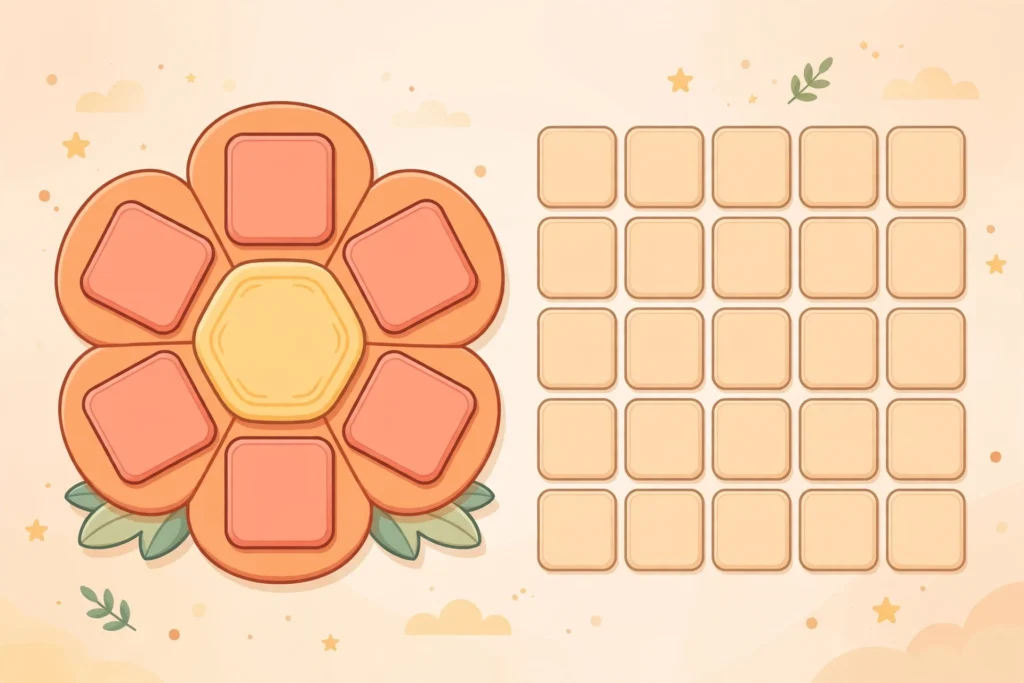
Blossom is a daily word puzzle built around a flower-shaped board. The board shows seven letters: six outer petals and one center petal. Your task is to make words of four letters or more using those letters. Every word you make must include the center petal letter. You can reuse letters as often as you like, which means a small set of letters can produce a surprising number of words.
The special goal in Blossom is the pangram. A pangram is a word that uses all seven letters on the board at least once. Finding a pangram is a proud moment for most players, because it shows you have explored the full board rather than stopping at the easy words. The game also ranks your progress as you find more words, so you can see how far you have come and how much of the puzzle remains.
Blossom is published as a daily puzzle, and a new board appears each day. That daily rhythm is part of its charm. Players often return at the same time each day, compare notes with friends, and try to beat their own result from yesterday. If you are new to the game, start with our guide on how to play Blossom game, which walks through the rules step by step.
How Wordle Works
Wordle is also a daily word puzzle, but its structure is much tighter. Each day there is one secret five-letter word. You have six guesses to find it. After each guess, the game gives color feedback: correct letters in the right place, correct letters in the wrong place, and letters that are not in the word at all. You use that feedback to narrow down the answer guess by guess.
The appeal of Wordle is its focus. There is one target, one clear win condition, and a short game that usually takes only a few minutes. Many players enjoy the social side too, since everyone plays the same word on the same day and can compare how many guesses they needed, without sharing the answer itself.
Because Wordle gives you only six tries, every guess matters. A good opening guess, careful use of the color clues, and a calm approach to the final guesses all help. The game rewards logical thinking and a solid everyday vocabulary rather than speed.
Blossom Game vs Wordle at a Glance
The table below gives a fast side-by-side view. The sections after it explain each difference in more detail.
| Feature | Blossom | Wordle |
|---|---|---|
| Daily puzzle | One flower board per day | One five-letter word per day |
| Main task | Build many words from seven letters | Guess one word in six tries |
| Word length | Four letters or more | Exactly five letters |
| Must-use letter | Center petal letter in every word | No must-use letter, clues guide you |
| Special goal | Find the pangram using all seven letters | Solve in as few guesses as possible |
| Typical session | Flexible, dip in and out during the day | Short, usually a few minutes |
| Pressure | Low, no guess limit | Moderate, six guesses only |
Gameplay Differences That Matter Most
Open-ended play versus one answer
The biggest difference is freedom. In Blossom, there is no single answer to chase. You can keep finding words for as long as you like, and each new word adds to your score and rank. That makes Blossom feel relaxed and creative. You might start with short, obvious words, then notice longer combinations as you look at the board again.
Wordle feels more like a small mystery. You have a clear target and limited tries, so the game is about deduction. Each guess should teach you something. Players who enjoy logic puzzles and the tension of a countdown often prefer this style.
Time and daily routine
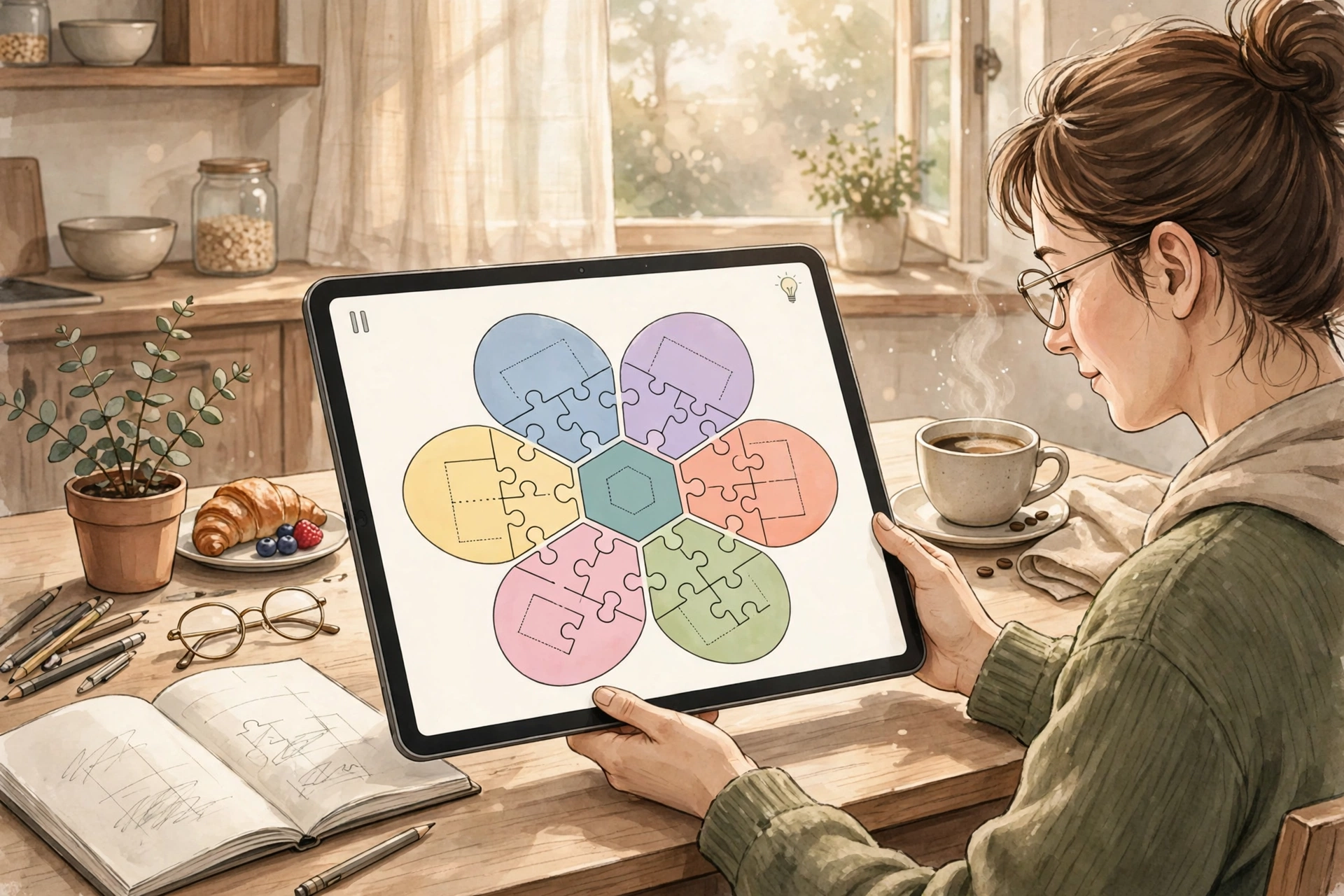
Wordle fits neatly into a short break. Most players finish in a few minutes, which makes it easy to play while coffee brews or during a commute. Blossom can also be short, but it invites longer play. You can spend five minutes finding a handful of words, then return later in the day to hunt for the pangram. That flexibility suits players who like to keep a puzzle open in the background.
If you only have a couple of minutes, Wordle is the simpler choice. If you enjoy a puzzle you can return to across the day, Blossom gives you more room to play.
Vocabulary and word knowledge
Both games reward a good vocabulary, but in different ways. Wordle rewards knowledge of common five-letter words and the ability to test letter patterns quickly. Blossom rewards word families: once you spot a root word, you can often build related words by adding endings, which helps you grow your total steadily.
Newer players sometimes find Blossom friendlier at first, because there is no penalty for a wrong guess and no game-over moment. You simply keep trying words until you decide to stop. Wordle, by contrast, can end in a loss if your six guesses run out, which some players find motivating and others find stressful.
Scoring Explained
Blossom scoring is based on the words you find. Longer words generally earn more points than shorter ones, and the pangram earns a notable bonus because it uses every letter on the board. As your total grows, your rank rises, which gives a clear sense of progress even if you do not find every possible word.
Wordle scoring is simpler and more social. Your result is the number of guesses you needed, from one to six, or a loss if you do not solve it. Many players share that number with friends, and streaks, meaning consecutive days solved, add a layer of friendly competition.
Neither scoring system is better in an absolute sense. Blossom rewards breadth and persistence, while Wordle rewards accuracy under pressure. Your preference may depend on whether you enjoy chasing a high total or protecting a streak.
Difficulty and Learning Curve
Both games are easy to learn and hard to master, which is part of why they stay popular. Wordle has almost no learning curve: you guess a word, read the colors, and guess again. The challenge comes from choosing smart guesses and staying calm near the end.
Blossom takes a little longer to feel natural, mainly because you must remember the center letter rule and get used to reusing letters. Once that clicks, most players find the game flows well. A useful habit is to scan the board for common prefixes and suffixes, then test word families one at a time. For a broader comparison with another popular letter game, see Blossom vs Spelling Bee.
Difficulty also varies by day in both games. Some Wordle words are common and quick to solve, while others have unusual letter patterns that take more thought. Some Blossom boards offer many easy words, while others hide the pangram behind less common letter combinations. That daily variety keeps both games fresh.
Which Game Should You Play?
The honest answer is that it depends on your mood, your schedule, and what kind of challenge you enjoy. Use the guide below as a starting point, not a strict rule.
Choose Blossom if you enjoy:
- Open-ended puzzles with no guess limit and no time pressure
- Building long word lists and hunting for a pangram
- A puzzle you can return to several times during the day
- A calm, creative way to explore vocabulary
Choose Wordle if you enjoy:
- A short, focused challenge with a clear win or loss
- Logic and deduction from color clues
- Comparing guess counts and streaks with friends
- A puzzle that fits into a few minutes
Can You Play Both?
Yes, and many players do. The two games use different mental skills, so playing both can feel balanced rather than repetitive. A common routine is to play Wordle first for a quick win, then spend a longer, relaxed session on Blossom later in the day. Others do the reverse, warming up with Blossom word lists before tackling the Wordle guess.
Playing both also helps you notice your own strengths. If you solve Wordle quickly but struggle to find Blossom pangrams, you may be stronger at deduction than at word generation, or the reverse. Either way, both games give you a daily reason to engage with words, which is a healthy habit for any reader.
If you want a general introduction before you start, the Blossom word game overview explains the format, the daily board, and what makes the game appealing to regular players.
Tips for Switching Between the Two Games
Switching is easy, but a few habits help. First, slow down when you move from Wordle to Blossom. Wordle trains you to think in five-letter blocks, while Blossom rewards longer and shorter words alike. Give yourself a minute to scan the whole flower board before you start typing.
Second, use different strategies for each game. In Wordle, your early guesses should test common letters. In Blossom, your early words should confirm the center letter and reveal word families you can expand. Third, do not judge one game by the other game’s standard. A strong Wordle streak does not guarantee a fast Blossom pangram, and a high Blossom rank does not guarantee a one-guess Wordle win. Each game has its own skills, and that is what makes playing both enjoyable.
Finally, keep it fun. Daily puzzles work best as a pleasant habit, not a chore. If a board feels frustrating, take a break and return later with fresh eyes. You will often spot words you missed on the first pass.
Frequently Asked Questions
Is Blossom harder than Wordle?
Not necessarily. Blossom has no guess limit, so it feels lower pressure, but finding the pangram can be tricky. Wordle is shorter, but the six-guess limit adds pressure. Difficulty depends on the daily board or word and on your personal strengths.
Do Blossom and Wordle take the same amount of time?
Wordle usually takes only a few minutes. Blossom can take a few minutes or much longer, depending on how many words you want to find. Blossom is more flexible, since you can stop and return later in the day.
Can I play Blossom and Wordle for free?
Both games are offered as free daily puzzles by their respective publishers. Availability and features can change over time, so check the official game pages for the latest details as of October 2026.
Which game is better for learning new words?
Both help, in different ways. Blossom exposes you to many words from one letter set, including longer forms and word families. Wordle teaches letter patterns and common five-letter words. Playing both gives you broader practice than either game alone.
Is Blossom the same as Spelling Bee?
No. Blossom and Spelling Bee share a similar flower-style board idea, but they are separate games from different publishers, with their own rules, scoring, and daily puzzles. Blossom is an independent daily word game, and it is not affiliated with Merriam-Webster.
Which game should a beginner try first?
Beginners who want a quick, simple challenge often start with Wordle. Beginners who want a relaxed puzzle with no risk of losing often start with Blossom. Try both for a week and keep the one, or both, that you look forward to playing.
Note: Blossom is an independent daily word puzzle game. This site is an informational guide and is not affiliated with, endorsed by, or connected to Merriam-Webster or any other game publisher mentioned here.
To try the official game, visit the Wordle game at The New York Times.