What Is the Blossom Blast Game?
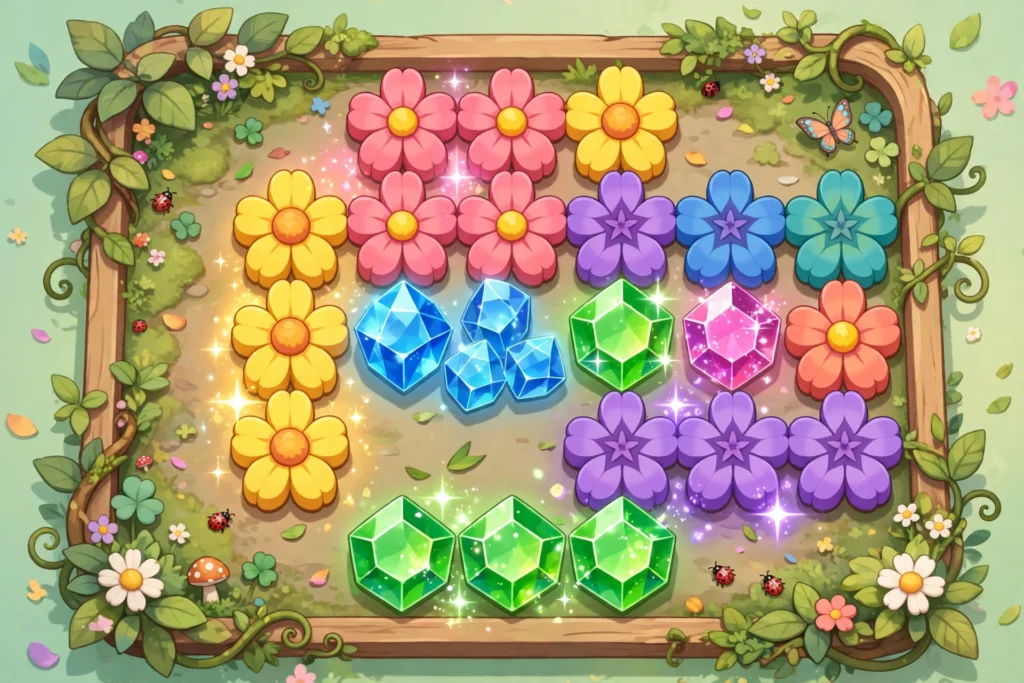
The Blossom Blast game is a match-3 puzzle game built around flowers, bright colors, and chain reactions. On each board, you see a grid filled with flower tiles in different colors and shapes. Your job is to swap two neighboring tiles so that three or more matching tiles line up in a row or a column. When a match forms, those tiles disappear, new tiles drop in from above, and you move closer to the goal for that level.
That simple idea is what makes the game easy to start and hard to put down. Early levels teach the basic swap, while later levels add obstacles, limited moves, and special goals that force you to think ahead. You may need to clear a set number of a certain flower, break through blocked tiles, or collect items that sit on the board. Each level feels a little different, even though the core action stays the same.
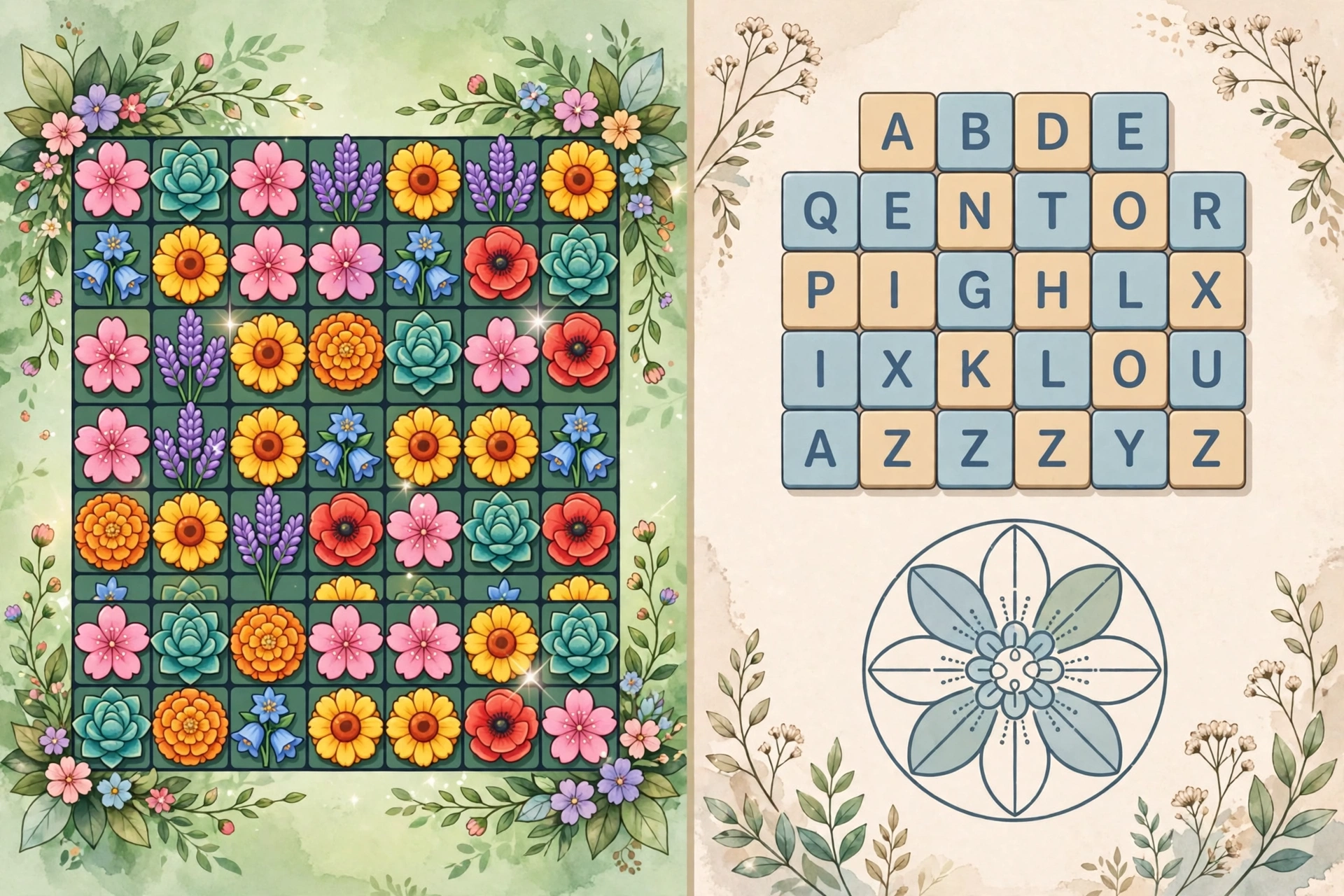
It is important to be clear about one point from the start. Blossom Blast is not the same game as the Blossom word puzzle. The word game is a daily letter puzzle in which players form words from seven letters arranged around a central letter, with a flower or petal theme. Blossom Blast, by contrast, is a tile matching game. The two games share a flower theme and a similar name, but they test different skills. One tests vocabulary and word building. The other tests pattern spotting, planning, and quick decisions on a board.
This guide treats Blossom Blast on its own terms. It explains how the game works, how to approach each board, and how to improve your results over time. It also compares Blossom Blast with the Blossom word game so you can pick the one that fits your mood, or enjoy both for different reasons.
How to Play Blossom Blast: The Basics
Most match-3 games, including Blossom Blast, follow the same basic loop. Once you learn it, you can play almost any level with confidence.
Step 1: Look at the Whole Board First
Before you make your first move, take a few seconds to scan the full board. Look for matches that are already close to complete, tiles sitting near the bottom, and any special tiles that could help you. New players often grab the first match they see at the top of the screen. That move may work, but it can also waste a chance to set up a larger match below. A short pause at the start of each level usually leads to better play.
Step 2: Swap Two Neighboring Tiles
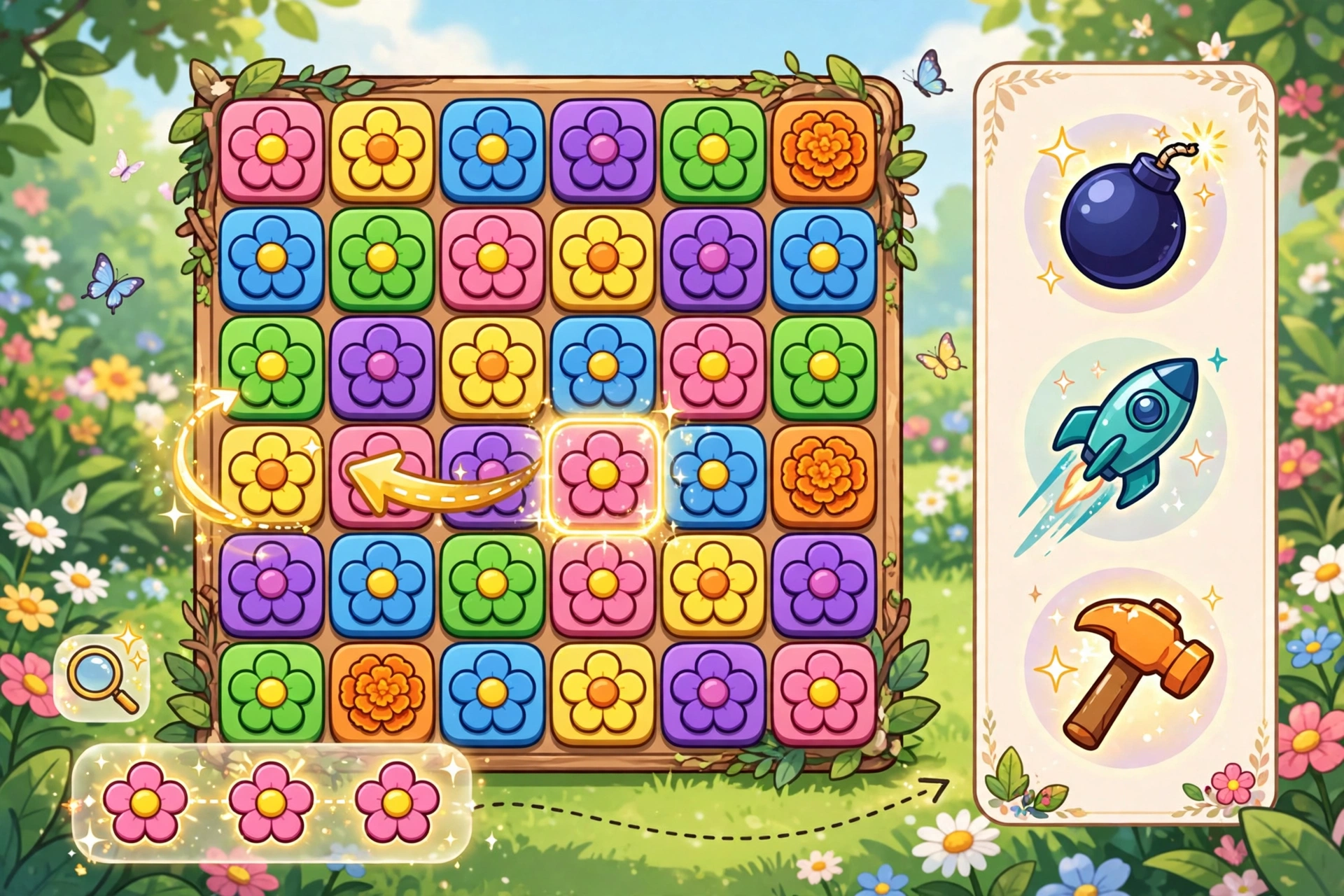
Pick a tile and swap it with the tile next to it, up, down, left, or right. The swap only counts if it creates a match of three or more tiles of the same kind. If it does not create a match, the tiles usually swap back, and you can try a different move. This rule keeps the game fair and encourages you to search for real matches instead of random swaps.
Step 3: Watch for Cascades
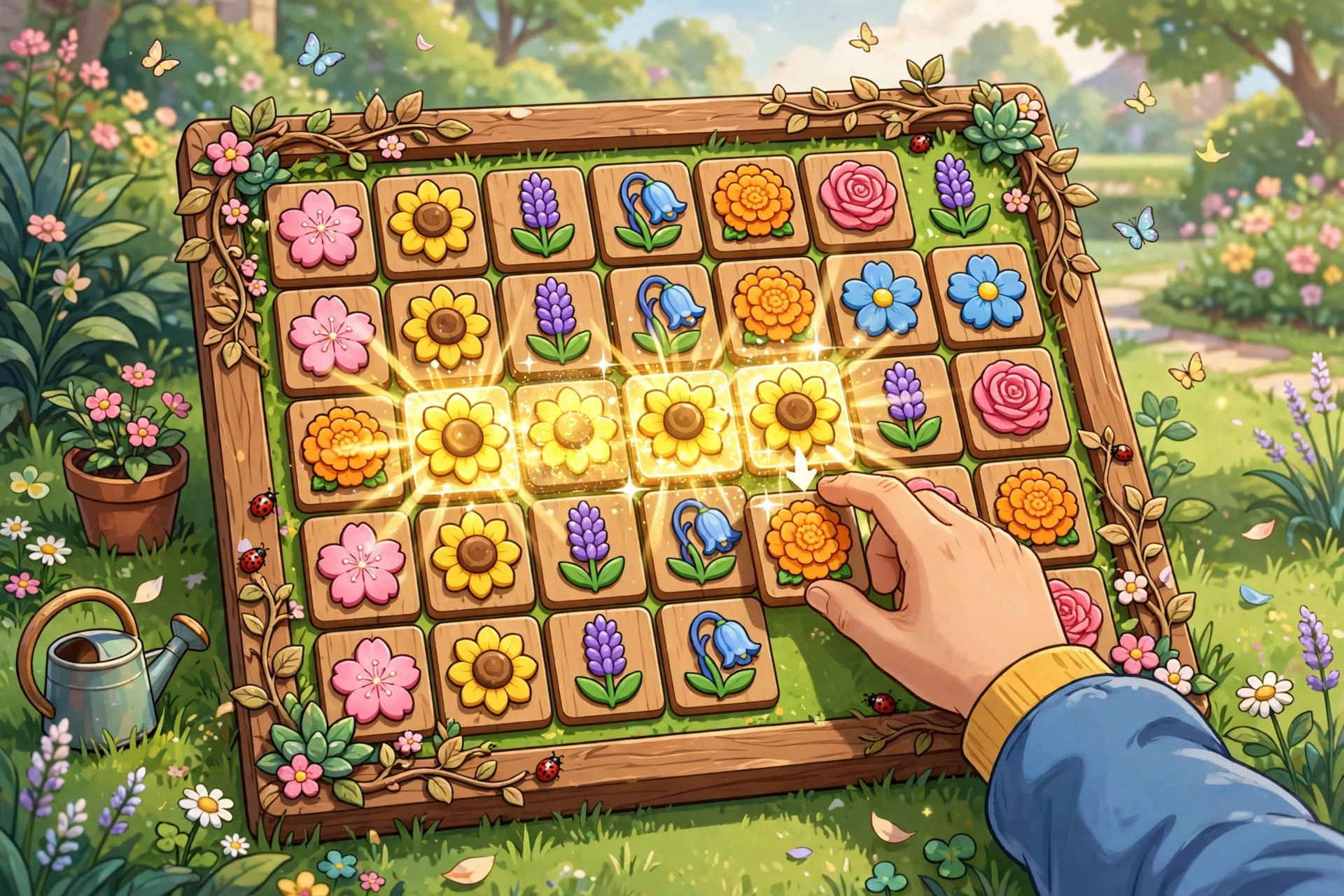
When matched tiles clear, new tiles fall into the empty spaces. Those falling tiles can form new matches on their own. These chain reactions, often called cascades, are one of the most satisfying parts of a match-3 game. They can clear large parts of the board without costing you an extra move, and they often help you reach a level goal faster than a single planned match would.
Step 4: Meet the Level Goal Before You Run Out of Moves
Each level has a goal, and most levels also have a move limit. Common goals include collecting a set number of flowers, clearing blocked squares, or bringing a special item to the bottom of the board. The level ends in success when you meet the goal within the move limit. If you run out of moves first, you can usually try the level again, often with a fresh board layout.
Board Elements You Will Meet
As you progress, Blossom Blast boards gain new elements that change how you plan. You do not need to memorize every possible feature, but it helps to know the main types.
Special Tiles and Boosters
Matching four or more tiles at once often creates a special tile. These tiles can clear a whole row, a whole column, or a group of nearby tiles when they are matched or activated. Boosters are extra helpers that you may earn through play or receive as rewards. Some clear a single tile, some shuffle the board, and some add extra moves. Use boosters with care. Saving a strong booster for a level where you are stuck is usually better than using it on an easy level you could clear without help.
Blocked and Layered Tiles
Some tiles sit under a cover, inside a box, or behind another layer. You may need to match next to them more than once to break them open. When you see blocked tiles, focus your matches near them. A match far away from a blocked area may look nice, but it will not help you clear that part of the board.
Collection and Delivery Goals
Some levels ask you to collect flowers of a certain color. Others ask you to guide an item down to the bottom row. For collection levels, match the target color whenever you can, even if a different match looks larger. For delivery levels, clear tiles under the item so it can drop. Moves at the bottom of the board tend to help delivery goals more than moves at the top, because bottom matches shift the whole board.
If you are new to word puzzles and want a calmer contrast to this fast visual game, our guide to the Word Blossom game explains how letter based play works and why many players enjoy it as a daily habit.
Blossom Blast Game vs the Blossom Word Game
Players often search for both games with similar words, so it is worth setting out the differences in plain terms. The table below gives a simple comparison.
| Feature | Blossom Blast Game | Blossom Word Game |
|---|---|---|
| Main skill | Pattern spotting and board planning | Vocabulary and word building |
| Core action | Swap tiles to match three or more | Form words from a set of letters |
| Session style | Level by level, often in short bursts | Often one daily puzzle to solve |
| Pace | Lively, with cascades and chain reactions | Calm, thoughtful, and unhurried |
| Best for | Players who like visual puzzles and quick wins | Players who like words, spelling, and word lists |
Neither game is better in general. The right choice depends on what you want from a few minutes of play. If you want color, motion, and fast feedback, Blossom Blast fits. If you want a quiet word challenge that you can think through at your own pace, the word game fits. Many players enjoy both, playing a word puzzle in the morning and a few match-3 levels later in the day.
For a direct look at how word puzzles differ from each other, see our comparison of the Blossom game vs Wordle. It explains scoring, daily play, and which style suits different players.
Strategies That Actually Help You Win
Winning at Blossom Blast is less about speed and more about order. The best players make fewer wasted moves, and they set up the board for the next move while they complete the current one.
Play From the Bottom When You Can
Matches near the bottom of the board change more tiles than matches near the top. When tiles fall after a bottom match, they can create new matches across the whole board. This does not mean you should ignore a strong match at the top, but when two moves look equal, the lower one is often the better choice.
Set Up Larger Matches
A match of four or five tiles is worth more than a match of three, because it often creates a special tile. Before you take a simple three tile match, check whether one more swap could turn it into a four tile match. Sometimes you need to move a tile into place over two turns. That patience pays off when the special tile clears a row or a group that a normal match could not reach.
Combine Special Tiles With Care
When two special tiles sit next to each other, combining them can clear a large area. This is a strong move, but it is not always the right move. If the level goal is to collect one color, a huge clear that ignores that color may waste the chance. Match the special tile play to the goal, not just to the size of the blast.
Focus on the Goal, Not the Score Alone
A high score feels good, but a level is won by meeting its goal. If the goal is to clear blocked tiles in one corner, spend your moves in that corner. If the goal is to collect red flowers, match red flowers even when a different color offers a larger cascade. Score follows good goal play. Goal play does not always follow a high score.
Save Boosters for Hard Levels
It is tempting to use a booster as soon as you get it. A better habit is to try a hard level a few times first. You will learn the board layout, the trouble spots, and the goal pattern. Then, when you use a booster, you will know exactly where it helps most. This habit also keeps your booster supply healthy for the levels that truly need it.
Common Mistakes New Players Make
Most early losses in Blossom Blast come from a small set of habits. Fixing these habits can lift your results quickly.
First, many players move too fast. They tap the first match they see without scanning the board. Slowing down for five seconds per move often leads to better matches and fewer wasted turns.
Second, many players chase cascades at the top while ignoring blocked tiles at the bottom. Cascades are fun, but they only help if they move you toward the goal. Keep one eye on the goal area at all times.
Third, many players use boosters on easy levels. Boosters are limited, and hard levels will come. Keep them for the boards where a normal run keeps falling short by a small margin.
Fourth, many players restart a level at once after a bad start. Sometimes a board that looks weak can turn around with one good cascade. Play a few moves before you decide to restart, unless the board clearly blocks your goal from the start.
Finally, many players treat every level the same. A collection level, a clearing level, and a delivery level each need a different plan. Read the goal before your first move, and let that goal shape your choices.
Is Blossom Blast Good for Short Sessions?
Yes, for many players, that is one of its strengths. A single level often takes only a few minutes, so the game fits into a coffee break, a commute, or a short pause between tasks. You can stop after one level without losing your place, and you can return later for the next board.
That said, match-3 games can also invite one more level more often than planned. If you play to relax, it helps to set your own limit in advance, such as three levels or ten minutes. A clear limit keeps a short session short, and it keeps the game fun instead of tiring.
Older players who prefer a slower pace may also enjoy word play. Our guide to the Blossom game for seniors covers larger text habits, calm daily play, and tips for players who want a gentle puzzle routine. The advice there also applies to anyone who wants puzzle play to feel easy on the eyes and easy on the mind.
Where to Play and What to Check First
As of October 2026, availability, features, and in game offers for games with similar names can vary by device, store, and region. Before you install any game, check the official store listing for the exact title, the developer name, recent reviews, and the permissions it asks for. This simple check helps you avoid look alike apps that use a similar flower name but offer a different game.
Also check whether the version you find is free to play with optional purchases, or paid up front. Many match-3 games are free to start, with optional boosters or extra lives available inside the game. If you prefer to avoid extra spending, look for the settings that control purchases, and set them to match your comfort level before you start playing.
Keep in mind that this site is an independent guide. It is not affiliated with Merriam-Webster, and it is not affiliated with the makers of Blossom Blast or the Blossom word puzzle. Game features can change over time, so the store listing for the version you play is the best source for current details.
How to Improve Over Time
Progress in Blossom Blast comes from pattern habits, not from memorizing one trick. Try to notice which moves tend to help you. Do bottom matches help you more often? Do special tile combos save hard levels? Do you win more when you slow down and scan first? Keep those habits, and drop the habits that lead to repeated losses on the same kind of board.
It also helps to replay a failed level with a fresh plan. The board may change, but the goal stays the same. On a second try, you already know where the trouble spots are. Use that knowledge. Focus on the goal area first, save boosters until you need them, and look for a setup move before you take a simple match.
Over weeks of play, you will start to see patterns without thinking hard about them. You will spot a four tile setup at a glance, notice when a bottom match will shift the board in your favor, and sense when a level needs a patient plan instead of fast taps. That steady growth is the real reward of a match-3 game, and it is why many players return to it day after day.
Frequently Asked Questions
Is the Blossom Blast game the same as the Blossom word puzzle?
No. Blossom Blast is a match-3 tile game in which you swap flower tiles to make matches. The Blossom word puzzle is a letter game in which you build words from a set of letters. They share a flower theme, but they are different games with different rules and skills.
How do you win a level in Blossom Blast?
You win by meeting the level goal within the move limit. Goals vary by level and may include collecting flowers, clearing blocked tiles, or guiding an item to the bottom of the board. Focus your moves on the goal area to finish levels more often.
What is the best first move in a match-3 game?
There is no single best first move for every board. A good habit is to scan the whole board, look for a move that sets up a four or five tile match, and prefer a lower match when two moves look equal. Bottom matches shift more tiles and can create useful cascades.
Should I use boosters right away?
In most cases, no. Try the level first, learn where it gets hard, and then use a booster where it helps most. Saving boosters for hard levels keeps your supply ready for the boards that truly need extra help.
Why do I keep running out of moves?
Running out of moves often means your moves are not aimed at the goal. Check the goal before you play, focus on the goal area, and avoid matches that look large but do nothing for the goal. Slowing down and planning each move also helps.
Is Blossom Blast suitable for beginners?
Yes. The basic swap and match rule is easy to learn, early levels teach the game step by step, and short levels make it easy to practice. Beginners who scan the board, play from the bottom, and focus on the goal tend to improve quickly.