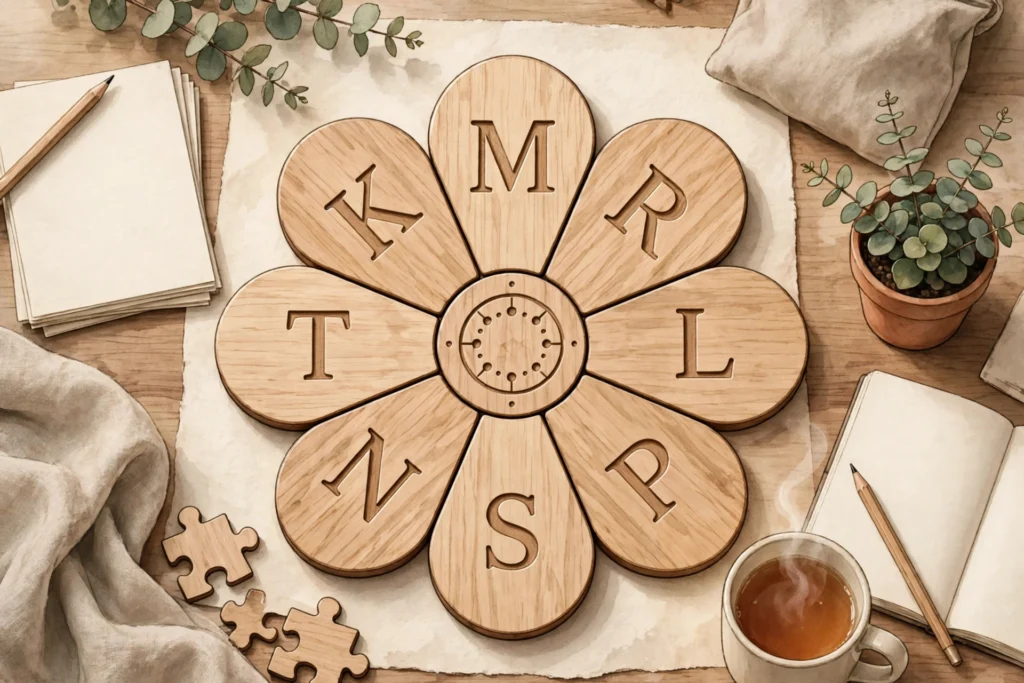
Word games come in many shapes, but the flower shape is one of the most inviting. There is something satisfying about watching a word bloom from a handful of letters, petal by petal. The word blossom game takes that idea and turns it into a daily habit for thousands of players, a short puzzle that fits into a coffee break and still rewards careful thinking.
This guide explains how the word blossom game works, the rules that matter, how scoring works, and the strategies that help you find more words. It is an independent informational guide and is not affiliated with Merriam-Webster or any other publisher. Puzzle rules can vary slightly between versions, so the version described here follows the most common flower puzzle format.
What Is the Word Blossom Game?
The word blossom game is a daily word puzzle in which players build words from a set of seven letters. The letters are shown as a flower: one letter in the center, surrounded by six petal letters. Your task is to form words using only those letters, with one firm rule: every word must include the center letter. You can reuse letters as often as you like, so you are not limited to using each letter once.
Each day brings a new flower, which means a new center letter, new petal letters, and a new set of possible words. Players often compare scores with friends or family, since everyone solves the same daily puzzle. That shared challenge is a large part of the fun, and it turns a solo puzzle into a small daily ritual.
The game is free to play in its most common form, and it runs in a browser or app without downloads or accounts in many versions. That low barrier is part of its appeal: open the puzzle, see the flower, and start building words.
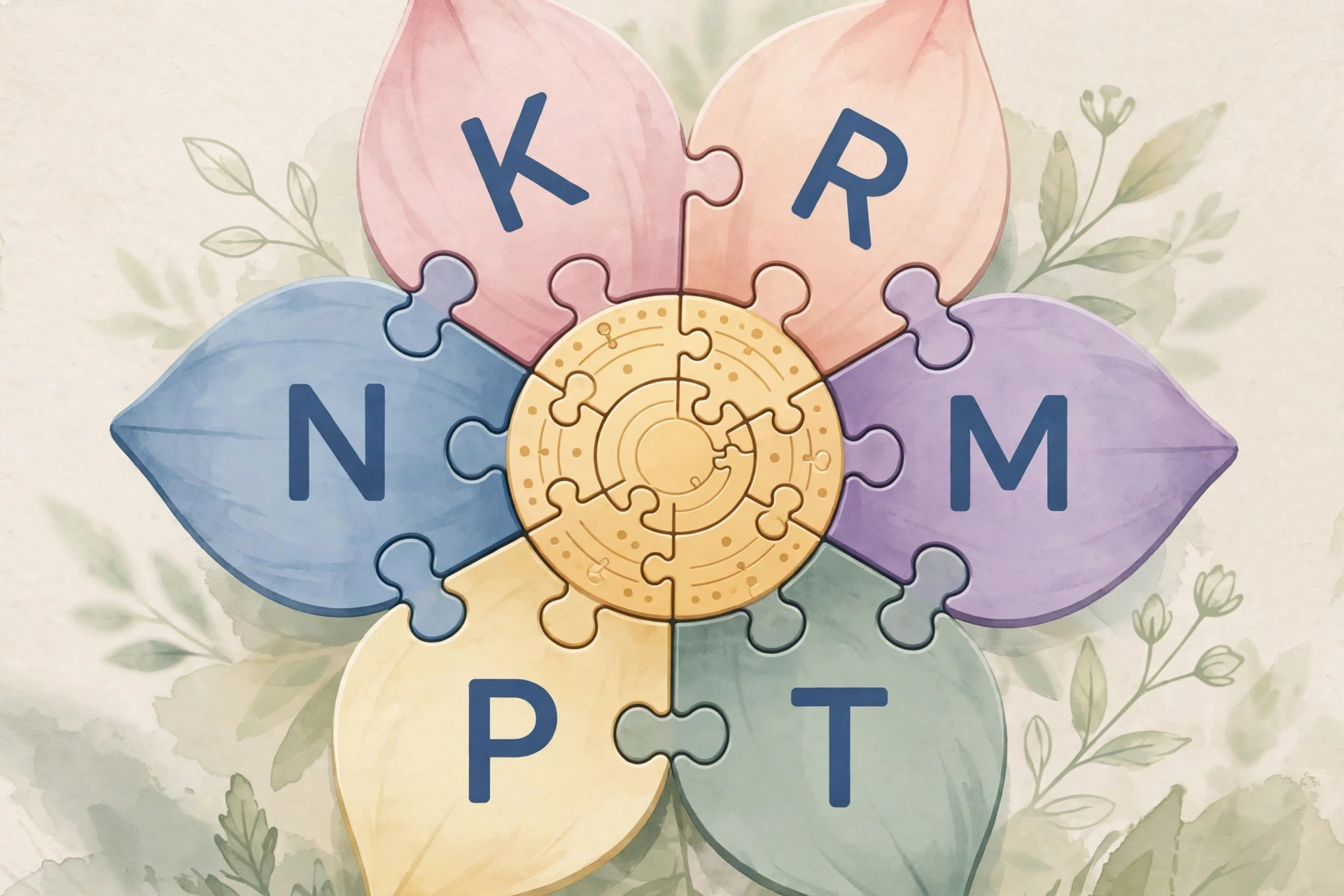
Word Blossom Game Rules
The rules are simple, but each one shapes your strategy. Learning them well is the fastest way to improve.
Rule 1: Every Word Must Include the Center Letter
This is the golden rule. No matter how good a word looks, it does not count unless it contains the center letter. When you scan the petals for ideas, start from the center letter and build outward. Many strong players mentally pair the center letter with each petal letter in turn, which surfaces word beginnings they would otherwise miss.
Rule 2: Words Must Be at Least Four Letters Long
Most versions require words of four letters or more. Three-letter words, even common ones, do not count. This rule pushes you toward longer, more interesting words, and it is why short filler words will not help your score. When you are stuck, look for four-letter combinations first, then stretch them into five and six-letter words.
Rule 3: Letters Can Be Reused
Unlike crossword puzzles, you can use any letter as many times as you want. A word like “bookkeeper” style repetition is allowed if the letters fit the flower. This rule rewards pattern thinking: once you find a useful letter pair, such as “er,” “ing,” or “tion,” you can reuse it across many words.
Rule 4: Only Real Dictionary Words Count
Made-up words, abbreviations, proper names, and slang usually do not count. The game checks your words against a dictionary, and rejected words simply do not score. If a word you are sure about is rejected, it may be a proper noun, a variant spelling, or a word the game’s dictionary does not include. Move on rather than arguing with the puzzle.
How Scoring Works in the Word Blossom Game
Scoring rewards length. Four-letter words earn a small number of points, often one point each. Longer words earn points equal to their length, so a six-letter word earns six points and an eight-letter word earns eight. This system means that finding one long word is usually worth more than finding several short ones.
The pangram is the star of scoring. A pangram is a word that uses all seven letters of the flower at least once. Finding one earns a large bonus on top of the word’s normal points, and in many versions it is the single biggest scoring event in a puzzle. Some puzzles have more than one possible pangram, which gives sharp players a second chance at the bonus.
Many versions also use score ranks. As your points grow, you pass ranks with flower-themed names, from a beginner rank up to the top rank for finding nearly every possible word. Ranks give you a target beyond your raw score, and they make daily progress easy to feel. For a deeper look at ranks and targets, see our guide to blossom game for seniors and our comparison in blossom game vs Wordle, which explains how the two puzzles differ.

Daily Tips to Find More Words
Good players do not just know more words. They search more systematically. These tips help you cover the flower thoroughly instead of guessing at random.
Start With the Center Letter Pairs
Pair the center letter with each petal letter and say the pairs aloud. “Ca,” “co,” “cr,” and similar starts often trigger word ideas. Do this for every petal, then try three-letter starts. This methodical pass finds words that random staring misses.
Build Around Common Endings
Endings like “ing,” “ers,” “tion,” “ness,” and “ed” turn short words into long ones. If you find “paint,” check “painter,” “painting,” and “paints.” If the letters allow it, each extension is a new word and a higher score. Endings are the easiest way to turn a modest word list into a strong one.
Look for the Pangram Early
Try to find the pangram early, because it reveals the full letter set in action. A useful trick is to write down all seven letters and try to build a long word that uses each one. Even a failed attempt teaches you which letter combinations work, which helps with the rest of the puzzle.
Use Plurals and Verb Forms
If a word works, its plural often works too, and its past tense and “ing” form may work as well. “Flower,” “flowers,” “flowered,” and “flowering” can be four words from one idea, provided the letters allow them. Always check the family of a word you find.
Take Breaks and Return
Word puzzles reward fresh eyes. If you are stuck, step away for ten minutes and return. Your brain keeps working on the letters in the background, and words that refused to appear often surface on the second look. Many daily players solve in two or three short sessions rather than one long one.

Word Blossom Game vs Other Word Puzzles
Wordle asks you to guess one hidden word in six tries. The word blossom game asks you to find as many words as possible from one flower. The skills overlap, but the mindset differs. Wordle rewards deduction and elimination, while the blossom game rewards vocabulary breadth and systematic searching.
Crosswords reward general knowledge and wordplay. The blossom game rewards pure word building, with no clues and no trivia. That makes it a good fit for players who love language itself rather than quiz knowledge. It is also gentler on beginners, because there is no fail state: you simply stop when you are happy with your score.
For a full overview of the puzzle, read our guide to the blossom word game, our daily puzzle guide in blossom daily word game, and the broader puzzle collection in blossom puzzle.
Frequently Asked Questions
How do you play the word blossom game?
Build words from seven flower letters, with every word including the center letter. Words must be at least four letters long, letters can be reused, and longer words score more points.
What is a pangram in the word blossom game?
A pangram is a word that uses all seven letters of the flower at least once. It earns a large bonus on top of its normal points, and some puzzles have more than one possible pangram.
Can letters be reused in the word blossom game?
Yes. You can use any letter as many times as you like, which means you can build long words with repeated letters and common endings.
Is there a new word blossom game every day?
Yes. A new flower puzzle appears daily, so every player faces the same letters and can compare scores with friends and family.
Do three-letter words count in the word blossom game?
No. Most versions require words of four letters or more, so three-letter words do not score even if they use the center letter.
What is a good strategy for beginners?
Start by pairing the center letter with each petal letter, build around common endings like “ing” and “ers,” check plurals and verb forms of every word you find, and take short breaks when you get stuck.
This guide is independent and is not affiliated with Merriam-Webster or any other publisher. Puzzle rules and scoring can vary slightly between versions, so check the rules shown in the version you play.