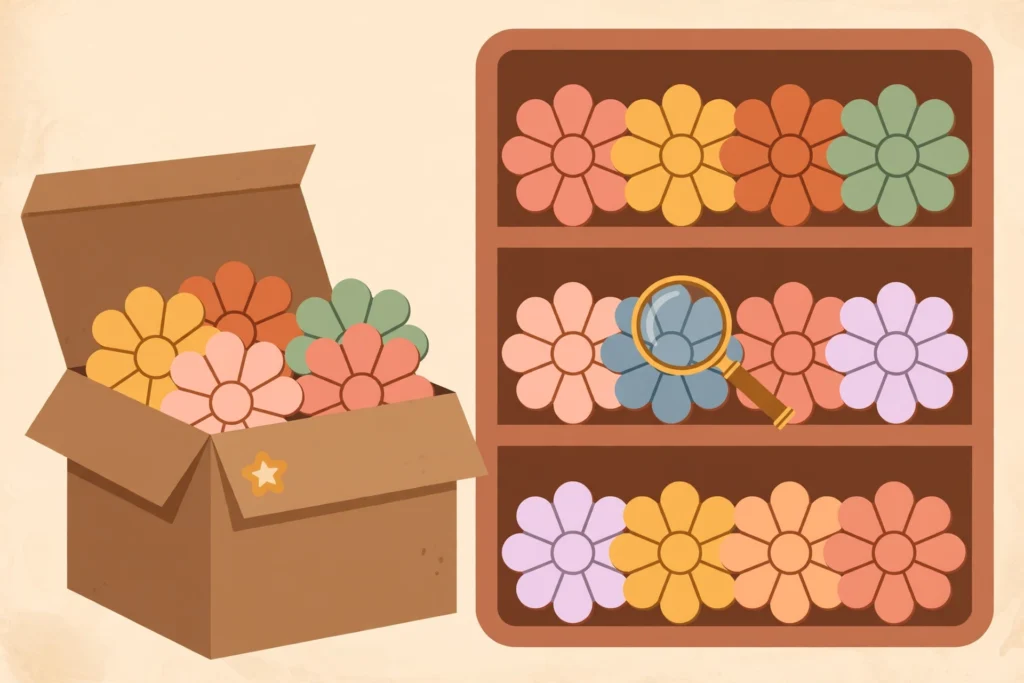
Quick answer: A Blossom archive is the record of past daily flowers: the letters, your words, your scores, and the pangrams you found or missed. Replaying archived puzzles is the fastest honest training there is, because you can compare today’s attempt against your first try on the exact same letters. Keep a short practice log, replay with clear rules, and your daily scores will show the difference within a few weeks.
Daily puzzles have a quiet flaw. Win or lose, the flower disappears at midnight, and with it goes everything it could have taught you. Which words did you miss? Was that pangram ever findable with your approach? An archive fixes that. It turns a string of one-off games into a training record you can revisit, measure, and learn from. This guide explains what a useful archive preserves, how to replay old flowers without fooling yourself, and the two-minute log that makes the whole habit stick.
What a good archive should preserve
Five things earn their space in an archive entry. The date, because progress only makes sense in order. The seven letters with the center marked, since the whole puzzle flows from them. Your twelve words, in the order you submitted them, which reveals your habits better than the final list does. Your score, plus the best score you know for that flower. And the pangram: found, missed, or found late. That last line stings a little. It is also the most useful line in the record.
What you can skip: screenshots of the board, long reflections, and ratings of how the puzzle felt. An archive is a training tool, not a diary. If an entry takes more than a minute to write, you will stop writing entries by Friday. Short and factual beats thorough and abandoned, every single time.
Why replaying old flowers makes you better
A fresh puzzle tests everything at once. A replay isolates one skill. When you sit down with a flower you played last month, the vocabulary is partly familiar, so your brain can focus on process instead: did you build a candidate list first, did you save slots for the bonus letter, did you hunt the pangram before submitting anything? Mistakes you could not see in the moment stand out plainly the second time through.
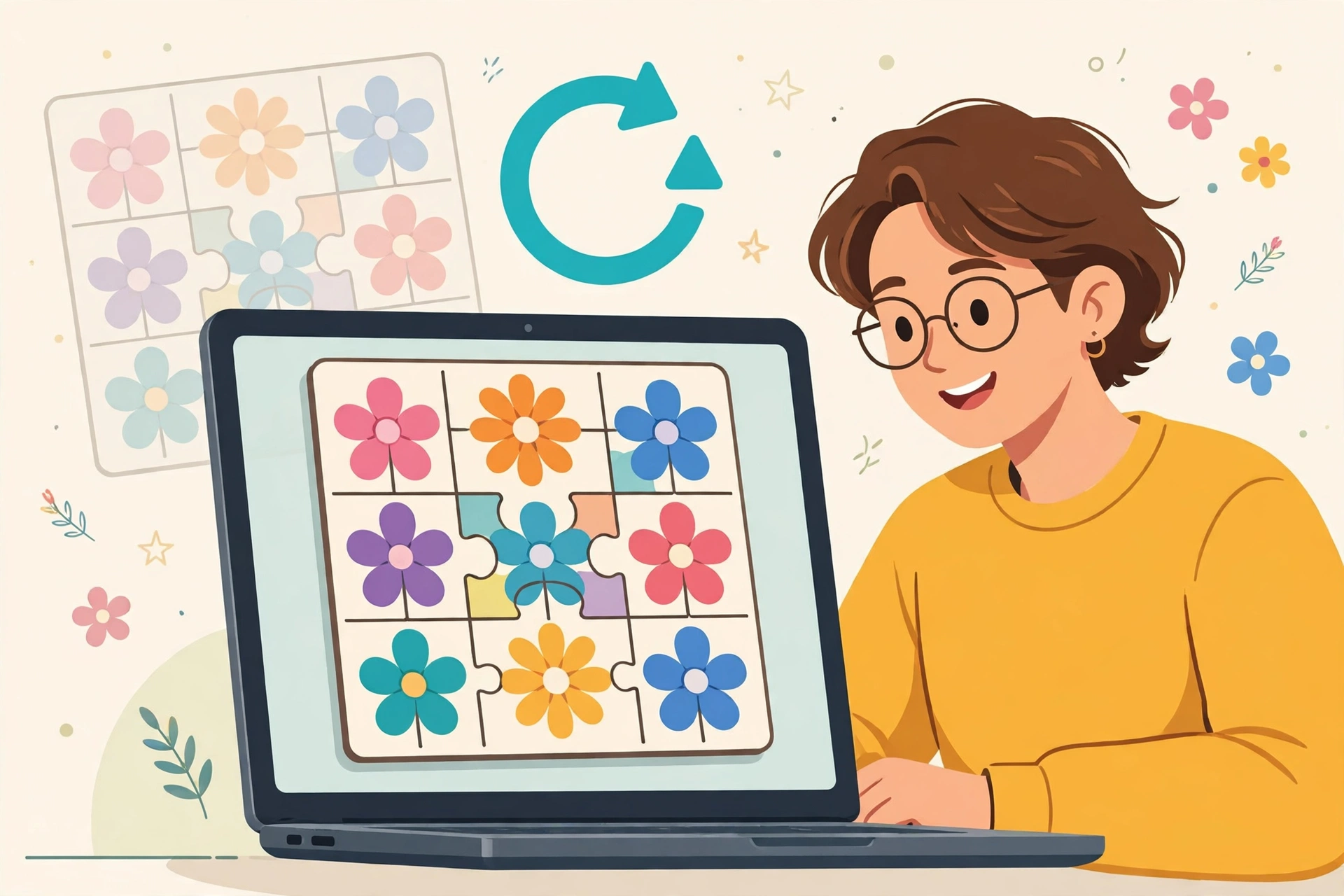
Replays also expose your blind spots honestly. If three archived flowers all show a missed pangram ending in -ing, that is not bad luck; that is a pattern with your name on it. One focused week of checking -ing forms before submitting will do more for your scores than a month of vague “play better” intentions. This is the same reason our daily blossom game routine builds in a short review step after each puzzle.
A practice log that takes two minutes
Use a notebook, a notes app, or a simple spreadsheet. One line per puzzle. Date, center letter, score, pangram result, and one short note about the biggest miss. That is the whole system. Here is what a healthy entry looks like: “Oct 14, center R, 118 points, pangram missed (TRAIN + suffixes were there), burned two slots on short words early.”
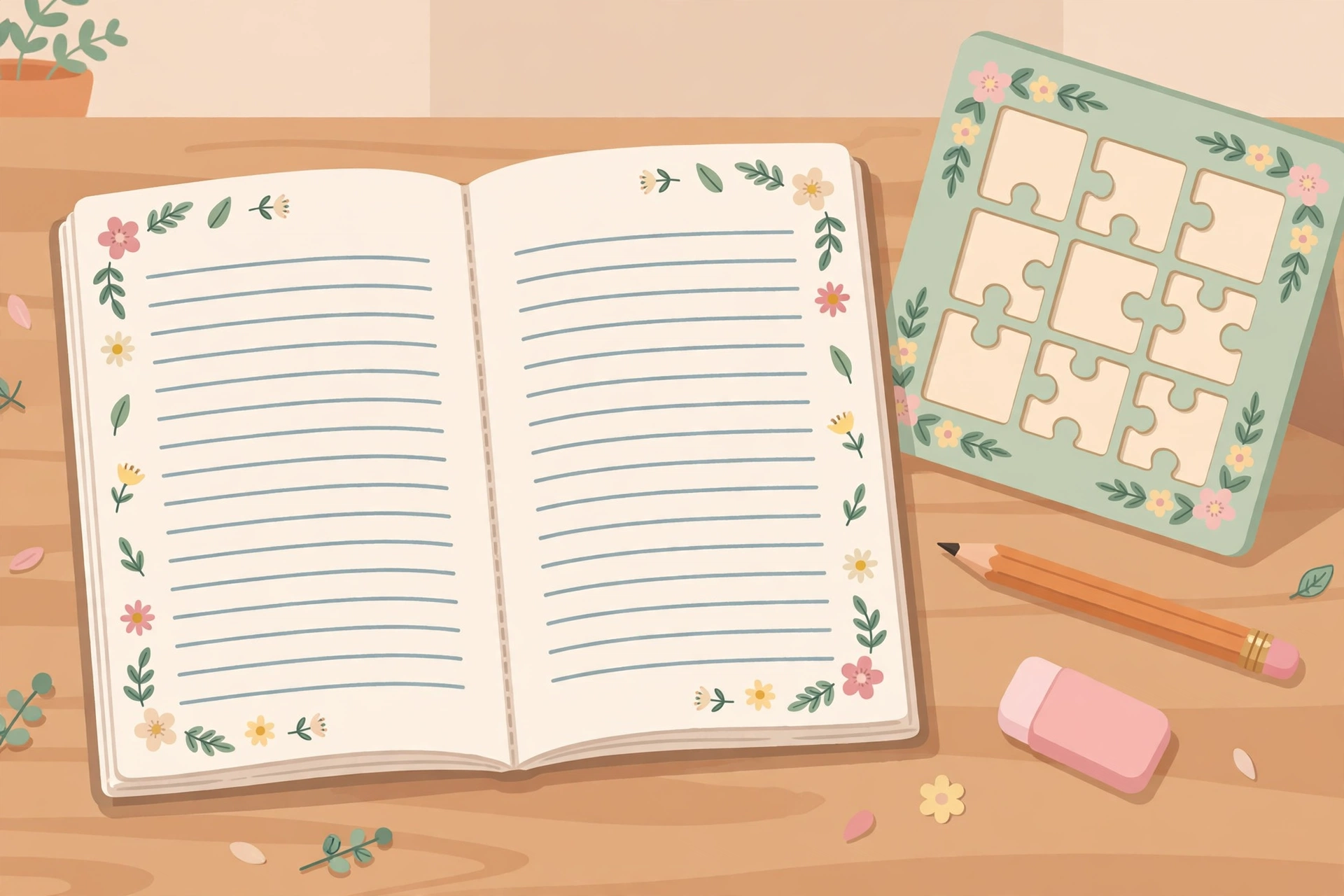
Once a week, read the last seven lines and look for repeats. Not highlights, repeats. The same error three times is your next training target. The log pairs well with the blossom game today page: play the daily flower, log the result, then open one archived puzzle while the lessons are still warm.
Replay rules that keep it fair
Replays only teach if they stay honest, so set three ground rules. First, no peeking: cover or scroll past your original word list before you start, or the replay becomes a memory test. Second, wait long enough. A puzzle from yesterday is still fresh; a puzzle from three weeks ago is ready. Third, score the replay separately and label it as a replay. Beating your old score by twenty points on a second attempt is progress, but it is a different kind of progress than a strong first attempt.
One more rule for the competitive: never let replay scores into your streak or your averages. They live in their own column. Mixing them in quietly inflates your sense of where you stand, and the daily puzzle will correct that illusion at the worst possible moment.
Patterns to hunt in old puzzles
After a month of archiving, your record becomes a map of how you think. Look for these four things. Suffix blindness: families of words you never tried, often -ness, -ment, or -ally forms. Bonus waste: how often your submitted words ignored the active bonus letter, which the blossom game unlimited practice board is perfect for drilling. Early-slot spending: short words submitted in the first three slots, before you knew what the board held. And center-letter tunnel vision: building every word around one or two favorite roots while the center letter offered others.
Each pattern has a one-line fix. Write the fix at the top of your log, where you will see it before tomorrow’s puzzle. Small, visible, specific. That is how archives turn into points.
Turn your notes into short drills
An archive tells you what to practice; drills are how you practice it. Keep them small and specific. If your log shows missed pangrams hiding behind one unused petal, spend ten minutes on the practice board building words that are forced to include your least favorite letter. If you keep burning early slots on short words, replay two archived flowers with a house rule: no submission under six letters until half your slots are gone. If the bonus letter keeps passing you by, play a replay where you may only submit words that contain the active bonus petal.
One drill at a time, for about a week. The temptation is to fix everything at once, but scattered practice fades by Tuesday. A single narrow rule rewires one habit, and habits are what an archive actually measures. When a drill starts to feel easy, check the log: if the pattern has stopped appearing in your daily entries, retire the drill and pick the next pattern. That cycle, notice, drill, retire, is the engine that turns a pile of old flowers into a steadily rising daily average. Players who skip the drill step still learn from their archives, just more slowly, because insight without repetition rarely survives contact with a ticking morning routine.
Building a weekly archive routine
Here is a rhythm that works for most players. Play the daily puzzle every morning as usual. On two or three evenings a week, replay one archived flower from at least two weeks back, timed if you enjoy pressure, relaxed if you do not. On Sunday, spend five minutes reading the week’s log lines and pick one pattern to work on. Then let it go. The archive serves the habit, never the other way around.

Give the routine a month before judging it. Score growth in word games is lumpy: flat for two weeks, then a visible jump when a pattern clicks. The chart in your log will show it before your gut does.
Frequently asked questions
Can I replay yesterday’s Blossom puzzle?
You can, but wait longer for real training value. A day-old flower is still in your memory, so the replay mostly tests recall. Puzzles from two to four weeks ago hit the sweet spot: familiar letters, forgotten answers.
What should I write in my practice log?
Five items: date, center letter, your score, whether you found the pangram, and one line about the biggest miss. Anything more and you will stop logging. Review the lines weekly and hunt for repeated mistakes. If a line takes you longer than a minute to write, trim the format, not the habit: drop the note field for a week rather than skipping entries entirely, because a thin log you keep beats a rich log you abandon every single time.
Is replaying old puzzles cheating?
No, as long as replay scores stay out of your daily record. Replays are practice, like a musician running old pieces. What would be dishonest is presenting a replay score as a first-attempt daily score.
How far back should my archive go?
Keep everything; storage costs nothing and old entries get more useful with age. A three-month-old flower is a clean test of how much your process has improved, because you will barely remember playing it. If your log lives in a notebook, photograph the pages once a month as a backup, since a lost notebook takes the whole record with it and the habit rarely survives starting over from an empty page.
My replay scores are much higher than my daily scores. Is that normal?
Completely. Familiar letters remove the discovery burden, so your process runs cleaner and your decisions come faster. What matters is the gap narrowing over time: as your daily process improves, first attempts start to look like replays.
Should I archive puzzles I played on other word games?
You can, in a separate section. Center-letter games transfer well, so a note about a missed pattern elsewhere often applies to Blossom. Just keep the scores in separate columns, since the scoring systems are not comparable.
Blossom game archive: one final check
Kept week after week, a blossom game archive stops being a record and becomes a coach. Before you close this page, pick one blossom game archive entry, replay it honestly, and check any disputed word in a standard dictionary such as Merriam-Webster.