Use the Blossom Game archive to revisit practice flowers, compare scores and record pangrams, missed patterns and vocabulary growth. This independently produced guide is reviewed for consistency with the playable practice version.
What an archive should preserve
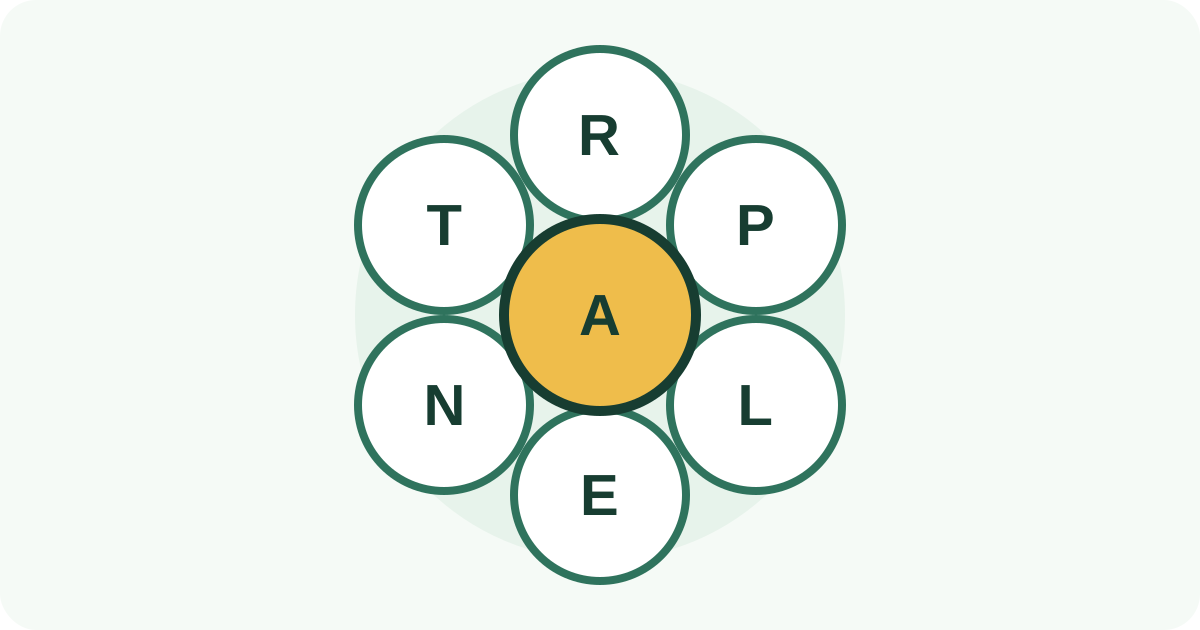
A useful archive records the date or practice-board ID, center letter, outer petals and scoring rules. It should not silently change an old board because that makes score comparisons unreliable.
Daily answer pages should also preserve the publication date and clearly separate hints from spoilers.
Why replaying helps
A second attempt reveals whether improvement came from memory or a better process. Compare the order of discoveries, bonus coverage and final weakest word. Record a missed root or suffix rather than only the total.
Spacing attempts across several days provides a stronger vocabulary check than replaying immediately after reading an answer list.
A simple practice log
Create columns for board, score, longest word, pangram, rejected word and lesson. One row per session is enough. After five rounds, review which center letters or endings cause the most difficulty.
No medical conclusion should be drawn from a game score. Treat the log as language practice and entertainment.
Archive and daily fairness
Keep full answers behind spoiler controls. Players visiting for the current challenge should not see the solution in a menu title or search snippet. Past puzzles can show complete reviewed lists after the date has passed.
Use today’s puzzle checklist for the current flower and the answer policy before publishing solutions.
Practice mode on this site
The New Practice button rotates through curated boards while Daily returns to the date-based flower. Local storage remembers the personal best, but clearing browser data resets it.
Start a fresh session at the game board, then apply the twelve-word strategy during replay.
How blossom game archive works in practice
Label every saved board with its date or practice ID, center letter and outer letters. Preserve the rules used at that time so an old score remains interpretable. Put complete solutions behind a spoiler control and keep hints visible first.
When replaying, wait long enough that you are testing recall rather than copying memory. Compare the order of discoveries and the weakest accepted word, then write one sentence about the pattern you missed. That creates a useful learning record without overstating what a game score measures. Include a review date when an archived explanation is corrected so returning readers can distinguish the original puzzle from later editorial changes.
A practical quality check
Test the advice on one complete round before deciding whether it works. Note the center letter, accepted words, rejected attempts, bonus changes and final score. Then repeat the process on a different flower. A method that works across several letter sets is more useful than a tip based on one unusually easy board. Keep the record brief enough that it supports play instead of interrupting it.
Accuracy also depends on separating visible game rules from dictionary judgment. First confirm length, required-letter use and the displayed character bank. If the entry still fails, check spelling and meaning in a current US English reference. This order makes the blossom game archive process transparent, reproducible and easier to correct when the game or editorial list changes. Readers can report a clear example through the Contact page.
Use this blossom game archive guide as a repeatable checklist, then test the method on the playable flower. For the publisher’s original version and current product context, visit the official Merriam-Webster Blossom page.