Use Blossom Game hints in three spoiler-light stages to spot roots, endings, repeated letters and possible pangrams without losing the puzzle. This independently produced guide is reviewed for consistency with the playable practice version.
The best hint leaves something to solve
A complete answer ends the search; a useful hint changes where you look. Start with word length, then the first letter, and finally a structural clue. This sequence gives the brain another chance to retrieve the answer at each stage.
For example, “seven letters” is a light clue. “Starts with P” is stronger. “Uses a repeated vowel” narrows the field further. The full answer should appear only after a clear spoiler label.
Look at the center letter in three positions
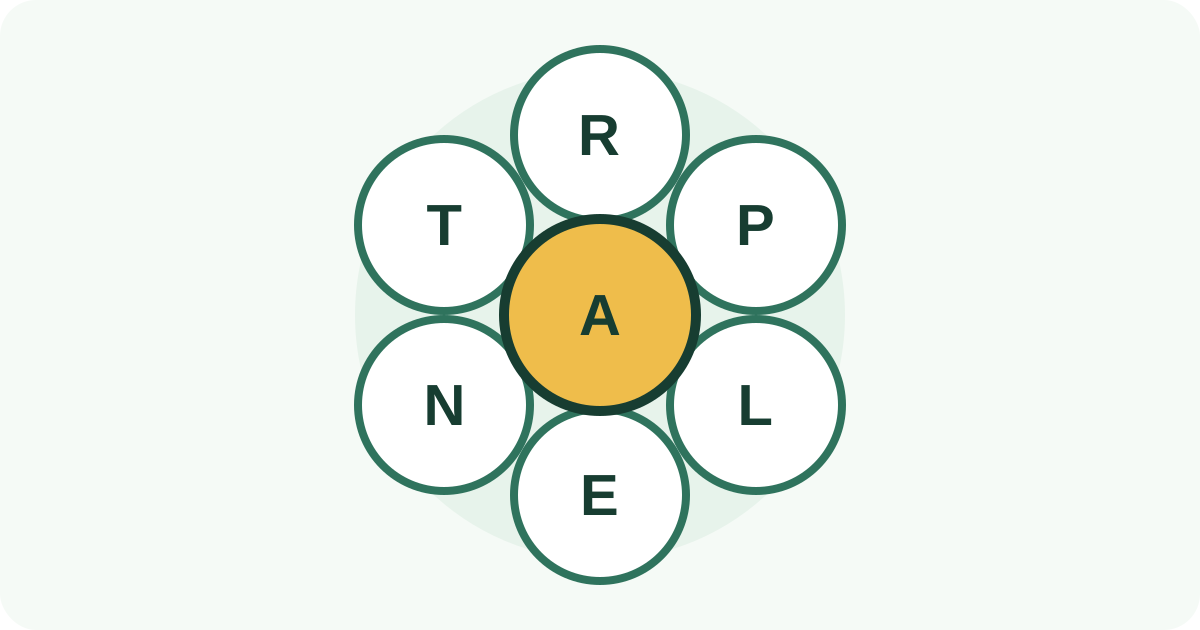
Many players search only for words beginning with the center. Place it at the beginning, middle and end of imaginary frames. A center A might support patterns such as a-, -ar-, or -al.
Next combine the center with each outer consonant and say the pair aloud. Familiar sound patterns can unlock a word that remained hidden in the flower layout.
Use roots before suffixes
Find a short legal root, then test forms that add an ending. A noun may support a plural; a verb may support -ed, -er or -ing; an adjective may accept -ly. Check every added character against the board.
This technique is more dependable than typing random strings because each guess grows from a known word. It also helps with the changing bonus letter: related forms often cover different petals.
Repeated letters are allowed
One printed letter does not limit you to one use. Words containing double consonants or several copies of a vowel remain possible. When six letters seem to fit but one appears “missing,” ask whether the answer actually repeats a displayed character.
The rule does not permit a new character. It only allows another use of a letter already on the flower.
A pangram-specific clue process
Write down all seven letters and cross each one off as a candidate uses it. If only one rare letter remains, search for a prefix, suffix or root that naturally includes it. Remember that the pangram may be longer than seven characters.
If the search stops being fun, return to ordinary bonus words. The strategy page explains when a pangram hunt is worth the time. For today’s board, return to the daily checklist.
How blossom game hints works in practice
Choose the lightest clue that restarts your search. Word length is less revealing than a first letter, and a structural clue is less revealing than the complete answer. Pause after each hint and search again before opening the next level.
When giving someone else a clue, name the puzzle date and hide any full solution behind a spoiler warning. A good clue should be accurate, specific to the displayed letters and useful without pretending that every dictionary accepts exactly the same list.
A practical quality check
Test the advice on one complete round before deciding whether it works. Note the center letter, accepted words, rejected attempts, bonus changes and final score. Then repeat the process on a different flower. A method that works across several letter sets is more useful than a tip based on one unusually easy board. Keep the record brief enough that it supports play instead of interrupting it.
Accuracy also depends on separating visible game rules from dictionary judgment. First confirm length, required-letter use and the displayed character bank. If the entry still fails, check spelling and meaning in a current US English reference. This order makes the blossom game hints process transparent, reproducible and easier to correct when the game or editorial list changes. Readers can report a clear example through the Contact page.
Use this blossom game hints guide as a repeatable checklist, then test the method on the playable flower. For the publisher’s original version and current product context, visit the official Merriam-Webster Blossom page.