
Quick answer: Today’s Blossom puzzle is one flower, the same for every player on today’s date: seven letters, one required center, twelve word slots. Start by inventorying the center letter, spend minute one on easy legal words, build families in minute two, chase the bonus letter in minute three, hunt the pangram in minute four, and review in minute five. Use progressive hints before you ever look at a full answer.
A daily puzzle is a small promise you keep to yourself. Five minutes, one flower, a score that is yours alone and yet shared with everyone else who played the same board today. Blossom’s daily mode works because it asks so little and gives back a clean measure of how your word brain is doing. This page is your companion for today’s flower: how to open it, a five-minute checklist that fits a coffee break, how daily play differs from practice, and how to grab a hint without handing the puzzle to a spoiler. Bookmark it, and let the routine carry you on the mornings when motivation is thin.
Start with today’s center letter
Before you type a single word, inventory the board. Name the center letter first, because it must appear in everything you play. Separate the vowels from the consonants. Then scan for endings the flower can support: -er, -ed, -ing, -est, -ly are the usual suspects, and each one needs its letters present on the petals. Jot three or four candidate words on paper or in your head before submitting anything. The daily board allows twelve accepted words, and the bonus letter starts moving the moment your first word lands, so a small stockpile of options makes the early turns calm instead of rushed.
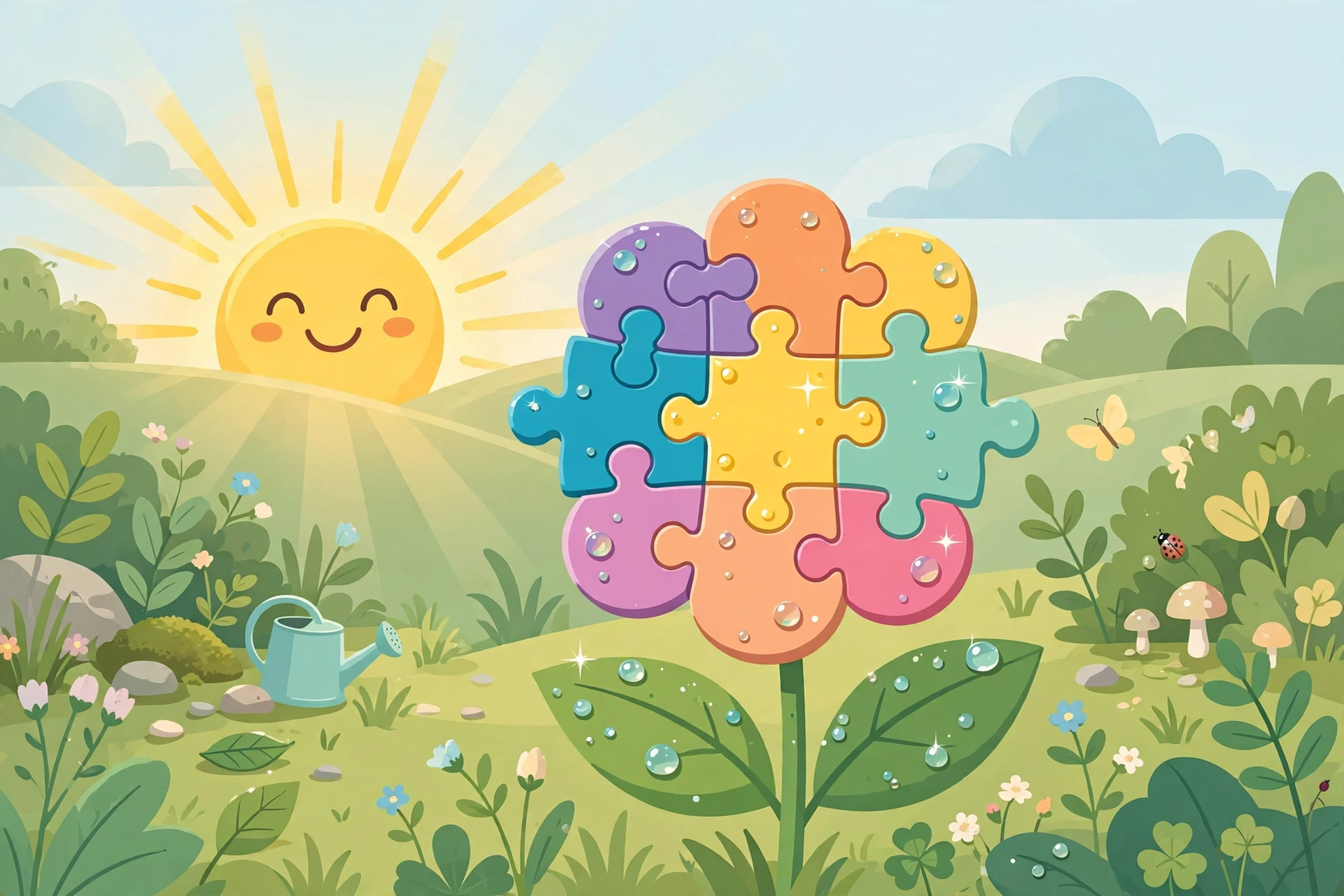
One more piece of inventory pays for itself: flag the letters that double well. A flower whose center is E, or whose petals hold L, S, or O, is quietly promising longer words than it first appears to hold, because repeated letters stretch a six-letter alphabet into eight- and nine-letter words. Write that promise down if you have to. Players forget their own inventory by minute three, right when it would have paid off.
The five-minute daily checklist
Minute one: the easy harvest. Play the obvious legal words, the ones already fully formed in your mind. Do not strategize yet; momentum first, and an early score on the board settles the nerves.
Minute two: families. Take each word you just played and test its relatives. Plurals, past tenses, -er forms, -ly forms. Flowers are built so that one good root often hides three scoring words.
Minute three: bonus chasing. Look at the highlighted bonus letter and ask which of your remaining candidates contains it, longest first. This is the minute where planned players separate from lucky ones.
Minute four: the pangram hunt. Give the all-seven-letters word its own dedicated minute. Test long endings, shuffle the petals, say combinations aloud. If it exists, it is usually the single biggest word of your round.
Minute five: review and close. Shuffle once more, sweep for anything the new arrangement reveals, then spend leftover slots on your best remaining candidates rather than your most desperate ones. There is no countdown timer pressuring you; the five minutes are a shape for the session, not a race.

How daily and practice modes differ
The rules are identical. The psychology is not. The daily flower is fixed by the calendar date, which means your score is comparable: against your own yesterday, and against anyone else who played today. That comparability is the soul of the mode, and it is why answer etiquette matters. Practice mode deals a fresh flower on demand. Nothing is comparable and nothing is at stake, which makes it the right laboratory for experiments: a new opening routine, a pangram-first strategy, a session devoted entirely to doubled letters. Players who improve fastest tend to run one daily for the record and a few practice boards for the lesson, a rhythm our daily Blossom routine guide explores in more depth.
Progressive hints, when today is not your day
Some flowers are simply harder, and some mornings the brain arrives at half speed. Progressive hints exist for both. Take them in stages: first the shape of what you are missing (a word’s length), then its starting letter, then a structural nudge like a doubled letter or a likely ending. Stop at the shallowest stage that unsticks you. The staged system on our hints page follows that order for today’s board, and the full solutions sit behind a clear warning at the very bottom for the days when even stage three is not enough. No shame attaches to either choice. The only losing move is quitting a daily habit over one thorny flower.
Record improvement instead of chasing perfection
A perfect round is a lovely accident, not a training plan. What actually compounds is the average. Keep the lightest possible log: date, score, whether the pangram fell, and one line about what worked. Within two weeks the log starts answering questions you did not know you had. Are consonant-heavy flowers your weakness? Do you score better in the evening? Does the five-minute checklist beat your old free-form style? Compare against the answers other players found only at the end of the day, using the spoiler-safe layout on our answers page, and let the misses teach the patterns rather than sting. A daily game rewards the player who returns, and returning is much easier when yesterday’s number feels like information instead of a verdict.
When today’s flower fights back
Some boards are stingy by design: one vowel, awkward consonants, a center letter that seems to fit nothing. Adjust the checklist rather than abandoning it. Spend minute two on repeats instead of families, because a vowel-poor flower usually hides its length in doubled letters. Lower the pangram expectation; some hard flowers offer a seven-letter word that uses six letters twice instead, and that is a fine prize. Most of all, reset what a good score means for the day. Judging a hard board by an easy board’s standard is how streaks die. The players still going after a hundred days are not the ones who never struggle. They are the ones who let a low-score day count as a played day and moved on.
One flower, thousands of solvers
There is a quiet pleasure in knowing that the exact seven letters on your screen are sitting on thousands of other screens this morning. Somebody is solving today’s flower on a train, somebody at a kitchen table, somebody on a lunch break three time zones away. That shared board turns a solitary habit into a low-key community, and it powers the rituals around the game: the score screenshot with no spoilers, the group chat message that says only “pangram day” or “the center letter betrayed me.” Guard that shared feeling when you talk about today’s puzzle. Compare scores freely, trade hints in stages, and let the answers wait until everyone’s board has closed. Tomorrow brings a fresh flower and a fresh chance to be the one who found the word nobody else did.
Frequently asked questions
What time does today’s Blossom puzzle change?
The daily flower is tied to the calendar date, so a new puzzle arrives with the new day. Finish today’s board before the date rolls over if you are keeping a streak or comparing scores with friends.
Does everyone get the same puzzle today?
Yes. The daily mode deals one flower per date, which is what makes scores comparable between players and across your own history. Practice mode is the one that deals a different flower every round.
How long should today’s puzzle take?
About five minutes with the checklist on this page. There is no timer, so take longer on a hard flower if you like; the five minutes are a routine shape, not a limit.
What should I do first when I open today’s flower?
Inventory before typing: name the center letter, sort vowels from consonants, check which common endings the petals can build, and note letters that double well. Then play the obvious words.
Where are today’s hints if I get stuck?
Progressive hints for the current flower are posted in stages, from gentle shape clues to stronger structural nudges, with complete answers kept behind a spoiler warning at the end.
Is it better to play the daily puzzle or practice mode?
Both, for different jobs. The daily board is your record and your shared experience with other players. Practice boards are your training ground for new strategies, with nothing at stake when an experiment fails.
What if I miss a day?
Nothing breaks. Your log simply has a gap, and today’s flower is waiting whenever you return. Streak pressure makes some players anxious and others consistent; if it starts to feel like a chore, drop the streak and keep the habit. A puzzle you play three calm mornings a week teaches you more than one you resent daily, and the checklist on this page will still be here.
This page is your guide to blossom game today, with the board, the checklist and spoiler-light hints in one place.
Blossom game today: one final check
In short, blossom game today rewards patience: check the board for blossom game today, work the checklist in order and take hints in stages. When you want to sharpen your blossom game today play, work through our blossom game strategy guide, and if a blossom game today session throws up a disputed word, settle it in a standard dictionary such as Merriam-Webster. Most players find blossom game today takes about five minutes, and a calm blossom game today streak beats a rushed one every time.
Come back tomorrow and blossom game today becomes the warm-up for the next flower: the letters change, but the calm routine behind blossom game today stays the same.